


By Dr. Liyan Massaband, DMD, MPH · Last updated: 30 Sept 2026
Quick answer: Implant dentures have three parts, and each lasts a different length of time. The implants in the jawbone can last decades and often a lifetime with good care. The denture that sits on top wears with daily chewing and usually needs relining or replacing after roughly 10 to 20 years, depending on materials and your bite. The small attachments that hold a snap-in denture in place are designed to wear out and are replaced every so often, usually about once a year. With regular checkups, good cleaning and no smoking, most people get many years of comfortable use from an implant denture.
Key takeaways
- “How long do denture implants last?” has three answers: the implants, the denture and the attachments.
- The implants themselves are the longest-lasting part.
- Snap-in (removable) and fixed implant dentures age differently.
- Smoking, uncontrolled diabetes, grinding and poor cleaning are the biggest threats.
- Regular maintenance visits catch small problems before they shorten the life of the whole system.
What Are Denture Implants?
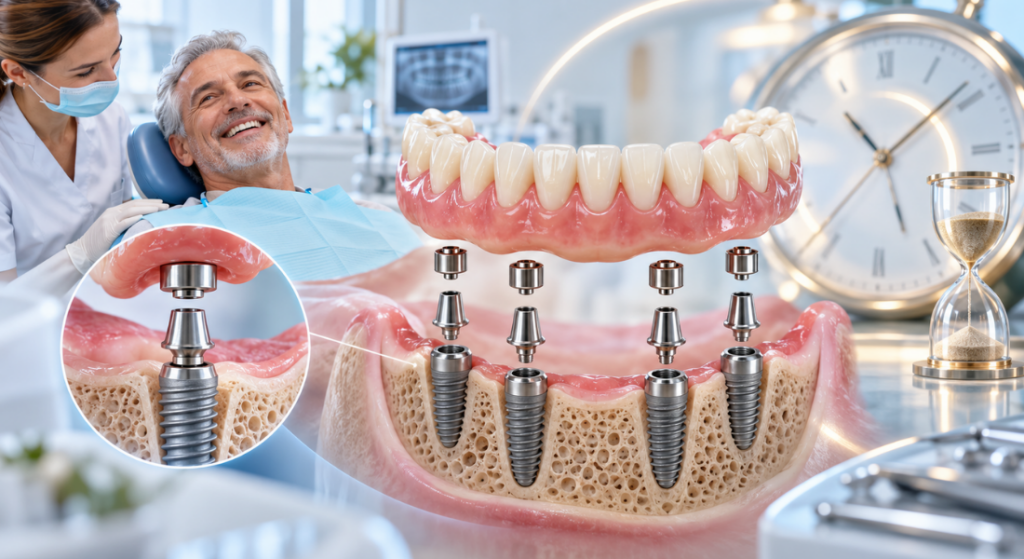
“Denture implants” usually means a full or partial denture that is held in place by dental implants instead of resting on the gums. There are two main types:
- Implant-retained (snap-in) overdentures. Usually two to four implants with small attachments. You snap the denture in, and take it out to clean it.
- Fixed implant dentures (often called All-on-4 or All-on-X). Four to six implants, with a full arch of teeth screwed into place. Only your dentist removes it.
The American Association of Oral and Maxillofacial Surgeons explains how implant-retained dentures improve stability and comfort compared with traditional dentures. Learn more about our implant overdentures and All-on-4 implants.
Average Lifespan of Each Part
| Part | Typical lifespan | What wears it out |
| Implants (titanium or zirconia posts in the bone) | Decades, often a lifetime | Gum infection around the implant (peri-implantitis), bone loss, smoking |
| Abutments and screws | Many years | Heavy bite forces or grinding can loosen or break them |
| Snap-in attachment inserts | About 6 to 12 months, sometimes longer | Taking the denture in and out every day |
| Snap-in overdenture | Often 10 to 20 years, with relines along the way | Tooth wear, cracks, changes in the gums underneath |
| Fixed denture, acrylic teeth | Often 10 to 15 years before major repair or remake | Chipped or worn teeth, staining |
| Fixed denture, zirconia | Often longer than acrylic | Chipping is possible with grinding |
| Traditional denture (for comparison) | Commonly 5 to 10 years | Bone shrinkage under the denture, worn teeth |
These are typical ranges, not guarantees. Your bite, bone, health and home care make the biggest difference.
How long do the implants themselves last?
The implants are designed to fuse with your jawbone permanently. The AAOMS reports success rates of up to 95 percent for dental implants and calls them a long-term solution when properly cared for. Cleveland Clinic notes that implants can last a lifetime, while the denture on top will need replacing at some point.
How long do implant overdentures last?
The denture part is made of acrylic and denture teeth, which wear with every meal. Over the years it may need:
- Relining, which refits the base to your gums as they change
- New attachment inserts, when the denture starts to feel loose
- Tooth repairs, if a tooth chips or wears down
- A new denture, eventually, usually after many years
The good news: when the denture wears out, the implants underneath usually don’t need replacing. A new denture is made to fit the same implants.
Implant Dentures vs. Traditional Dentures: Maintenance and Longevity
| Implant dentures | Traditional dentures | |
| Stability | Snap or screw into place, no slipping | Rest on the gums, can move when eating or talking |
| Bone | Implants help preserve the jawbone | Bone shrinks over time, so the fit gets worse |
| Adhesive | Not needed | Often needed |
| Chewing | Much stronger | Limited, especially on the lower jaw |
| Relines | Less often | Often every few years as the bone changes |
| Typical denture lifespan | Often 10 to 20 years | Commonly 5 to 10 years |
| Maintenance | Checkups, cleanings around implants, attachment changes | Relines, adjustments, adhesive |
| Upfront cost | Higher | Lower |
The biggest long-term difference is the bone. Without tooth roots or implants, the jawbone slowly shrinks, which is why traditional dentures loosen over time. Implants keep stimulating the bone. See our comparison of dental implants vs. dentures.
What Shortens the Life of Denture Implants?
- Smoking and vaping, which reduce blood flow and raise the risk of implant failure and gum infection
- Uncontrolled diabetes, which slows healing and increases infection risk
- Poor cleaning around the implants, which leads to peri-implantitis, the main cause of long-term implant loss
- Grinding or clenching, which overloads screws, attachments and teeth
- Skipping checkups, so small issues like a worn attachment or loose screw go unnoticed
- Not enough bone at the start, sometimes solved with bone grafting
- Some medications and treatments, such as certain bone medications or radiation to the jaw. Always share your full medical history.
Learn the warning signs in our guides to dental implant failure and dental implant complications.
How to Make Your Implant Denture Last Longer
Daily care for a snap-in overdenture
- Take it out and brush it with a soft brush and non-abrasive denture cleaner, not regular toothpaste.
- Brush around each implant with a soft or single-tuft brush.
- Soak the denture overnight in a denture solution, and rinse it before putting it back in.
- The ADA’s denture care guide recommends a soft brush and a non-abrasive cleanser.
Daily care for a fixed implant denture
- Brush twice a day with a soft brush.
- Clean underneath the bridge with a water flosser, super floss or interdental brushes.
For both
- Keep professional cleanings and implant checkups, often every 3 to 6 months at first.
- Wear a night guard if you grind.
- Don’t bite hard objects like ice, nutshells or hard candy.
- Don’t smoke.
- Call us early if anything feels loose, sore or different.
Signs Your Implant Denture Needs Attention
- A snap-in denture that feels loose or no longer “clicks” firmly
- Sore spots, bleeding or swelling around an implant
- A cracked, chipped or badly worn tooth
- A clicking or rocking fixed denture, which may mean a loose screw
- Food getting trapped under a fixed denture more than before
- A bad taste or smell around the implants
Most of these are quick fixes when caught early.
Replacing or Refreshing an Implant Denture
When the denture wears out, you usually have options:
- New attachment inserts for a loose snap-in denture, often in a single short visit
- A reline, which refits the base to your gums
- Repair or replacement of individual teeth
- A new denture on the same implants
- Upgrading from a snap-in to a fixed denture, if you have enough implants and bone
Costs depend on what’s needed. Ask us for a written estimate. See payment options for financing.
Are Implant Dentures Right for Older Adults?
Age alone isn’t a barrier. What matters is your general health, your bone and whether you can keep the implants clean. Many people in their 70s and 80s do very well with implant dentures, and for someone with a loose lower denture, two implants can make eating and speaking much easier. We look at your medical history, medications and dexterity, and choose the simplest design that will work for you.
If you’ve lost several teeth, a full mouth restoration plan may combine implants, crowns and dentures. You can also read how long dental implants take to heal.
Implant Dentures in Beverly Hills
At ConfiDental Beverly Hills, Dr. Liyan Massaband has completed more than 1,000 implant procedures and plans every implant denture around long-term maintenance, not just the first day. We’ll explain which parts will need care over time, what that care typically costs, and how to keep your implants healthy for the long run.
Book an implant denture consultation or call (310) 858-9212. Learn more about our dental implant services.
Frequently Asked Questions
How often do denture implants need to be replaced?
The implants themselves rarely need replacing if they stay healthy. The denture on top usually needs relining over time and replacing after many years, and snap-in attachment inserts are typically changed about once a year.
How long do implant overdentures last?
The denture part often lasts 10 to 20 years with relines along the way, depending on materials, your bite and care. The implants underneath usually last much longer.
Do All-on-4 dentures last forever?
The implants can last decades or a lifetime. The fixed teeth may need repairs or a remake after many years, especially if they are acrylic or you grind your teeth.
Are implant dentures better than traditional dentures?
For most people, yes. They are more stable, allow stronger chewing, help preserve the jawbone and don’t need adhesive. They do cost more upfront, and they need regular maintenance.
What is the most common cause of dental implant failure?
In the long term, the most common cause is peri-implantitis, an infection of the gum and bone around the implant, usually from plaque buildup. Smoking and uncontrolled diabetes raise the risk.
What is the 3-2 rule for dental implants?
It’s a spacing guideline dentists use when planning implants: roughly 3 mm of space between two implants, and about 1.5 to 2 mm between an implant and a natural tooth. It helps protect the bone and gums around each implant.
Should a 70-year-old get dental implants?
Age alone isn’t a reason to avoid implants. Your general health, bone and ability to clean the implants matter much more. Many older adults benefit greatly from implant dentures.
What happens to dental implants as you get older?
Healthy implants stay fused to the bone. As you age, keeping them clean can become harder, so simpler designs, easy-to-clean dentures and regular professional cleanings become more important.
How much does it cost to replace an implant denture?
It depends on whether you need new inserts, a reline, repairs or a completely new denture. A new denture on existing implants costs far less than starting over with new implants.
Can I sleep in my snap-in implant denture?
Most dentists recommend taking it out at night to clean it and give your gums a rest. Follow your dentist’s advice for your specific denture.
About the Author
Dr. Liyan Massaband, DMD, MPH leads ConfiDental Beverly Hills. She earned her Doctor of Dental Medicine from Midwestern University and her Master of Public Health from the University of Southern California. In more than 15 years of practice she has completed over 1,000 implant procedures and focuses on full-mouth restoration, complex cases and prevention-first care.
References
- American Association of Oral and Maxillofacial Surgeons. Are Dental Implants Permanent?
- American Association of Oral and Maxillofacial Surgeons. Advantages of Implant-retained Dentures
- Cleveland Clinic. Implant-Supported Dentures.
- American Dental Association, MouthHealthy. Dentures.
This article is for general education and is not a substitute for a personal examination.