


Losing a tooth changes things. Not just how your smile looks, but how you chew, how you speak, how confident you feel in a conversation, and quietly over months and years, how your face itself is shaped. These consequences accumulate in ways that most patients do not fully anticipate when they first experience tooth loss, and they are the reason that tooth replacement matters far beyond aesthetics.
Dental implants have become the clinical standard for tooth replacement precisely because they address all of these consequences together, not just the visible gap. Unlike any other tooth replacement option, an implant replicates the entire natural tooth structure from the root up, and that distinction produces benefits that no bridge, denture, or partial can match.
At Confidental Beverly Hills, Dr. Liyan Massaband has helped hundreds of patients through implant treatment, from single tooth replacement to full mouth rehabilitation. The transformation that patients describe is consistently deeper than they expected. Not just a restored smile, but restored confidence, restored comfort, and often a restored relationship with food and social situations that tooth loss had quietly been affecting for years.
This guide explains the five primary benefits of dental implants in full clinical and practical detail, so you can make a genuinely informed decision about whether implants are the right path for you.
Schedule a Dental Implant Consultation | Call (310) 858-9212
Why the Choice of Tooth Replacement Matters More Than Most People Realize
Before getting into the specific benefits, it is worth understanding why not all tooth replacement options deliver equal outcomes, because this context makes the implant advantages meaningful rather than abstract.
When a tooth is lost, two problems arise simultaneously. The visible problem is the gap in your smile and the impact on your bite and chewing function. The invisible problem is what begins happening to the jawbone underneath.
Bone is a living tissue that responds to mechanical stimulation. When a tooth root is present, biting and chewing forces travel down through the root and stimulate the surrounding bone, signaling the body to maintain bone density and volume in that area. When the root is absent, that stimulation stops. The bone in that region begins to resorb, meaning the body gradually reabsorbs it because it is no longer receiving the signals that justify maintaining it. This resorption is progressive, measurable, and permanent.
A dental bridge fills the visible gap and restores some chewing function, but it sits above the gumline and does nothing to interrupt the bone resorption happening underneath. Conventional dentures sit on top of the gum tissue and, by pressing against the ridge as the bone shrinks, can actually accelerate resorption in some cases.
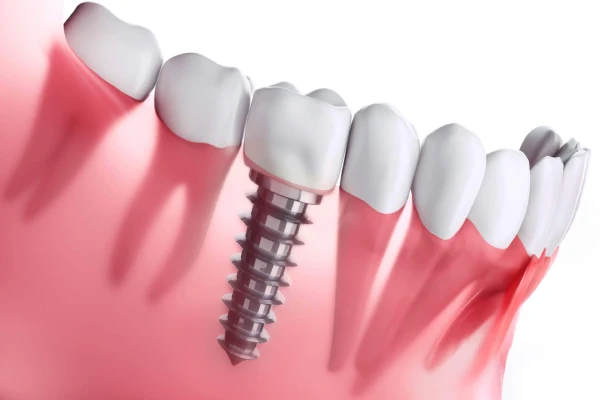
A dental implant is the only tooth replacement option that addresses both the visible and invisible consequences of tooth loss. The titanium post that replaces the tooth root integrates with the jawbone and restores the mechanical stimulation that prevents resorption. Everything that follows from this fundamental difference is what makes dental implants the most comprehensive tooth replacement available.
Benefit 1: Permanent Stability That You Stop Thinking About
The most immediately noticeable difference patients report after receiving dental implants is the feeling of stability. Not the self-conscious awareness of a restoration that requires management, but the absence of awareness entirely.
Conventional dentures and removable partial dentures create a persistent awareness of themselves. They move during eating, particularly when biting into food from the front or chewing on one side. They click audibly in quiet settings. They require adhesives to stay in place, adhesives that wear off, leave a taste, and need to be reapplied. Over time, as the jawbone changes shape due to resorption, the fit of a denture degrades progressively, requiring periodic relining to restore a reasonable level of function.
An implant is anchored in the jawbone. The titanium post undergoes osseointegration, a biological process by which bone cells grow directly onto and into the titanium surface, creating a bond that is functionally equivalent to the attachment between a natural tooth root and its surrounding bone. There is no movement, no sliding, no clicking, and no adhesive. The restoration becomes, for all practical purposes, a permanent part of your mouth that you simply stop thinking about.
Patients who have lived with removable dentures for years before transitioning to implant-supported restorations consistently describe this shift as transformative. Meals that required avoidance or careful management become straightforward. Social situations that required awareness of the denture become easy. The constant low-level management of a removable appliance simply disappears.
What Stability Means for Daily Life
The stability of an implant restores normal behavior in every context where tooth loss or dentures had previously required adaptation.
Eating. You bite, chew, and enjoy food the way you did with natural teeth. There is no need to avoid specific textures, cut food into unusually small pieces, or chew only on one side to prevent denture dislodgement.
Speaking. Certain speech sounds, particularly those involving the tongue contacting the front teeth, are altered by missing teeth or by ill-fitting dentures that shift during speech. Implants restore the natural contact points that clear articulation depends on, without any risk of movement mid-sentence.
Laughing and expressing emotion. Patients with dentures often report modifying how freely they laugh or open their mouths to avoid denture movement or visible gaps. The psychological weight of managing an appliance in social situations is something that only becomes fully apparent when it is gone.
Benefit 2: Preservation of Jawbone and Facial Structure
This is the benefit that most patients do not think about before experiencing tooth loss, and the one that matters most over the long term.
Jawbone resorption after tooth loss is not a cosmetic concern. It is a structural and health concern that progresses continuously in the absence of root stimulation and cannot be reversed once it has occurred. The rate of bone loss is most rapid in the first year after extraction, with studies documenting up to 25 percent of bone width lost in the first year alone. Over time, the cumulative bone loss changes the visible structure of the face.
The characteristic appearance of long-term denture wearers, the collapsed lower third of the face, the forward rotation of the chin, the deepening of the lines around the mouth, is the direct result of progressive jawbone resorption. It is not simply aging. It is the structural consequence of bone loss that began the day teeth were extracted.
How Implants Interrupt This Process
When a titanium implant post is placed into the jawbone and osseointegration occurs, the implant begins fulfilling the same mechanical role as a natural tooth root. Biting and chewing forces travel through the implant crown, down through the post, and into the surrounding bone, stimulating bone maintenance. The body continues sending nutrients to the bone cells in that area and does not initiate resorption.
This bone preservation has cascading effects. The gum tissue that depends on bone volume for support maintains its height and contour around the implant. The adjacent teeth, which rely on the bone between them for stability, retain their supporting structure. The facial profile, specifically the lower third of the face, maintains its natural proportions.
Patients who receive implants promptly after tooth loss preserve the bone volume that makes implant placement straightforward. Patients who wait years before pursuing implants often have significantly reduced bone volume that requires grafting procedures before implants can be placed. This is one of the strongest clinical reasons to address tooth loss sooner rather than later.
For patients who already have bone loss at a potential implant site, bone grafting at Confidental Beverly Hills can rebuild adequate volume for implant placement in the majority of cases. The grafting procedure adds to the treatment timeline but makes implant placement possible for patients who would otherwise be told they do not have sufficient bone.
Benefit 3: Complete Protection of Neighboring Teeth
This benefit is particularly significant for patients considering a dental bridge as an alternative to a single tooth implant, and it is one that the upfront cost comparison does not capture.
A traditional three-unit dental bridge fills the gap left by a missing tooth by using the two adjacent teeth as structural anchors. These anchor teeth must be permanently prepared for the bridge by reducing their enamel and dentin to create the shape needed for crown placement. This is an irreversible process that removes healthy, sound tooth structure from two teeth that had no clinical problem, purely to support a prosthetic for the missing one.
The consequences of this preparation accumulate over time. The prepared anchor teeth are permanently weakened relative to their intact state. They are now covered with crowns, meaning the margins of those crowns become sites where new decay can develop if oral hygiene is imperfect. They may eventually require root canal treatment as the pulp responds to the proximity of the preparation. When the bridge reaches the end of its functional life after 10 to 15 years and needs replacement, the replacement procedure again involves the same teeth, now with additional years of wear and structural history behind them.
A single tooth implant fills exactly the same gap with no involvement of adjacent teeth whatsoever. The implant stands completely independently in the jawbone. The teeth on either side of it are never touched, never prepared, never crowned, and never compromised. Their integrity is fully preserved for their natural functional lifespan.
The Long-Term Math of Bridge vs. Implant for Tooth Preservation
When patients compare bridge and implant costs, they typically compare the upfront figures. But the comparison changes significantly when adjacent tooth outcomes are factored in over a 20-year horizon. A bridge that requires replacement every 10 to 15 years, combined with the eventual restorative and endodontic costs associated with the prepared anchor teeth, frequently exceeds the lifetime cost of a single implant while delivering inferior outcomes for the adjacent teeth and no bone preservation at the missing tooth site.
This is the clinical reason that Dr. Massaband at Confidental Beverly Hills recommends implants for single tooth replacement in appropriate candidates, even when bridges are less expensive initially.
Benefit 4: Full Restoration of Biting Force and Dietary Freedom
The functional limitation of missing teeth extends beyond the obvious inconvenience of chewing. Chronic dietary restriction due to poor chewing ability is associated with real and measurable nutritional consequences, particularly in older adults whose diets narrow progressively as tooth loss accumulates and chewing function declines.
Patients with full conventional dentures typically retain approximately 20 to 25 percent of their natural biting force. The pressure sensitivity of the gum tissue and the instability of the denture under load combine to make anything requiring significant bite force painful or impractical. Steak, raw vegetables, hard fruits, crusty bread, and other nutritionally valuable foods become difficult or impossible to eat comfortably. Diets shift toward softer, more processed options that are often lower in fiber, protein, and essential nutrients.
What Implants Restore
Dental implants anchored in the jawbone restore biting force to near-normal levels because the force generated during chewing is transferred directly through the implant into bone, just as it is with a natural tooth root. There is no gum tissue bearing load, no appliance flexing or shifting under pressure, and no sensitivity threshold that limits how hard you can bite.
Patients consistently report that one of the most meaningful changes after implant treatment is the restoration of normal eating. Foods avoided for years become possible again. Meals shared with family and colleagues no longer require modification or planning around what can be eaten without difficulty. The social dimension of food, which tooth loss quietly erodes over time, is restored.
For patients receiving full arch restorations such as All-on-4 or All-on-6 treatment, the restoration of chewing function is often the most significant quality of life change reported at follow-up appointments, even more immediately appreciated than the aesthetic improvement.
Benefit 5: Natural Appearance, Speech, and Psychological Confidence
Modern implant crowns are fabricated from high-grade dental ceramic that replicates the optical properties of natural enamel with extraordinary fidelity. The translucency, the surface texture, the way light moves through the material, all of these characteristics are achievable in contemporary porcelain restorations in ways that earlier generations of dental materials could not approach.
The result, in skilled hands with quality materials, is a restoration that is genuinely indistinguishable from the natural teeth surrounding it. Not “good for a fake tooth” indistinguishable. Simply natural-looking to anyone observing a smile in ordinary social and professional settings.
Why Appearance Matters Beyond Vanity
The research on the psychological impact of tooth loss and tooth replacement is consistent and significant. Missing front teeth in particular are associated with measurable changes in social behavior, occupational confidence, and self-reported quality of life. People modify their smiles, limit their laughter, hold a hand over their mouth when speaking, and avoid professional situations where their appearance is under scrutiny.
These behavioral changes are not superficial. They reflect genuine changes in how people navigate social and professional life when they are self-conscious about their smile. And they reverse when the smile is restored.
Patients at Confidental Beverly Hills consistently report that the confidence change after implant treatment extends well beyond being pleased with a new tooth. It changes how they present themselves, how freely they engage in social situations, and how they feel about their appearance in photographs, professional settings, and everyday interactions.
The Speech Dimension
Certain sounds require precise contact between the tongue and the front teeth, or specific positioning of the lips relative to tooth structure. Missing teeth, particularly in the front of the mouth, alter these contact points and can produce subtle or pronounced changes in articulation. Conventional dentures address this partially but introduce the constant concern of movement during speech.
An implant restoration restores the precise contact points and structural relationships that natural speech depends on, without any risk of movement. Patients who had developed subtle speech compensations around missing teeth or unstable dentures often notice these resolving naturally within weeks of implant restoration.
Bonus Benefit: Long-Term Cost Effectiveness
The upfront cost of dental implants is higher than bridges or dentures. This fact is straightforward and worth acknowledging directly. What the upfront comparison misses is the total lifetime cost picture.
A conventional full denture typically lasts seven to ten years before needing replacement, and requires periodic relining as the underlying bone changes shape throughout this period. A dental bridge lasts approximately ten to fifteen years before replacement. Each replacement involves a cost comparable to the original.
An implant post that has successfully osseointegrated into the jawbone can last 20 years to a lifetime. The crown component may require replacement after 15 to 20 years depending on wear, but the implant itself typically remains functional and structurally sound for decades. The total cost of maintaining a dental implant over a 25-year period is frequently lower than the cumulative cost of replacing bridges and relining dentures over the same period, in addition to all the clinical benefits that bridges and dentures do not provide.
For a complete breakdown of dental implant costs in Beverly Hills including all procedure types and financing options, see our dedicated pages: How Much Do Dental Implants Cost in Beverly Hills and Single Tooth Dental Implants Cost in Beverly Hills.
Who Makes a Good Candidate for Dental Implants?
The majority of adults who are missing one or more teeth are candidates for dental implant treatment. Candidacy assessment at Confidental Beverly Hills evaluates the following factors.
Adequate bone volume. Sufficient jawbone height, width, and density at the implant site is necessary to anchor the implant post and allow osseointegration. Bone loss from extended tooth absence or gum disease is common and frequently addressable through bone grafting.
Healthy gum tissue. Active periodontal disease must be treated and controlled before implant placement. Untreated gum disease significantly increases implant failure risk.
General health. Certain health conditions including uncontrolled diabetes, autoimmune disorders, and active cancer treatment affect healing and may require treatment optimization before proceeding. Certain medications, particularly bisphosphonates used for osteoporosis, require special evaluation. Most health conditions, when managed appropriately, do not disqualify patients from implant treatment.
Non-smoking or willingness to stop. Smoking significantly impairs wound healing, reduces bone-to-implant contact during osseointegration, and dramatically increases the risk of implant failure. Smoking cessation before and during the healing period is strongly recommended and affects candidacy assessment for patients who smoke.
Adequate development completion. Implants are placed in fully developed jawbones. For most patients, this means implants are appropriate from the late teens onward, with the specific minimum age determined by jaw development rather than chronological age.
Commitment to maintenance. Implants require the same oral hygiene commitment as natural teeth, plus regular professional monitoring. Patients who are not committed to these maintenance requirements are at higher risk for peri-implantitis, an inflammatory condition around the implant that can compromise its long-term stability.
If you have been told you are not a candidate for implants due to bone loss or other factors, a consultation with Dr. Massaband at Confidental Beverly Hills is worth pursuing. Advances in bone grafting, guided bone regeneration, and implant planning technology have expanded what is achievable for patients who would have been excluded from implant treatment a decade ago.
The Technology Behind Implant Success at Confidental Beverly Hills
Dental implant placement is a surgical procedure, and like all surgical procedures, its success depends substantially on the quality of planning and execution. The technology used at Confidental Beverly Hills reflects a commitment to both.
3D Cone Beam CT (CBCT) imaging provides a three-dimensional map of the jaw anatomy before any surgical step is taken. This imaging reveals bone volume and density at the implant site, the precise location of nerves and sinuses that must be avoided during placement, and any anatomical variations that affect the surgical plan. Implants planned without 3D imaging rely on two-dimensional x-ray estimates of anatomy that cannot capture depth, angulation, or the relationship of structures in three planes. CBCT planning eliminates this limitation.
Digital implant planning software overlays the proposed implant position on the CBCT data, allowing Dr. Massaband to determine the optimal implant diameter, length, position, and angulation before the first surgical appointment. The planned position accounts for the final crown emergence, ensuring the implant is placed where it supports the best possible restoration.
Surgical guides translate the digital plan into precise physical guidance during surgery, allowing the drill to follow the planned path with minimal deviation. Guided implant surgery reduces procedure time, improves accuracy, and minimizes the surgical footprint, contributing to faster healing and reduced post-operative discomfort.
For detailed guidance on what recovery from implant placement involves, our comprehensive resource on what to expect after a restorative dental procedure covers every stage of the healing process.
Why Titanium and Zirconia Are Used for Dental Implants
Patients frequently ask about the materials used for implant posts and whether alternatives to titanium are available.
Titanium is the material used in the vast majority of dental implants placed worldwide. Its selection is based on decades of clinical research demonstrating exceptional biocompatibility, meaning the body does not mount an immune response against it or attempt to reject it as a foreign material. Instead, bone cells grow directly onto the titanium surface through osseointegration, creating the stable bone-to-implant bond that is the foundation of implant stability. Titanium has a documented long-term track record in both dental and orthopedic applications that no other implant material currently matches.
Zirconia (ceramic) implants are an alternative available for patients with documented sensitivity to metals or those who prefer a completely metal-free restoration. Zirconia implants are tooth-colored throughout, which can offer an aesthetic advantage in patients with thin gum tissue where the implant margin might otherwise be visible. Their biocompatibility is well established, and their long-term clinical data is growing, though it does not yet match the multi-decade track record of titanium.
At Confidental Beverly Hills, both options are discussed during your consultation. Dr. Massaband considers your clinical situation, aesthetic priorities, and any documented material sensitivities when recommending the appropriate implant material for your case.
Caring for Dental Implants: What Maintenance Actually Involves
One of the genuine advantages of dental implants from a patient perspective is how straightforward their maintenance is compared to what patients expect.
An implant crown is brushed and flossed exactly as natural teeth are. There is no special technique, no removal, no soaking, and no adhesive application. The surface of a porcelain implant crown does not develop cavities since there is no tooth structure beneath it. However, the gum tissue and bone surrounding the implant are subject to inflammation if bacterial plaque accumulates at the gum margin, and this is the area of maintenance that requires attention.
Peri-implantitis is an inflammatory condition affecting the soft tissue and bone around a dental implant, analogous to periodontitis around a natural tooth. When plaque is consistently allowed to accumulate at the implant-gum interface without adequate cleaning, this inflammation can progress and, in serious cases, cause bone loss around the implant that compromises its stability. This condition is preventable with consistent oral hygiene and professional monitoring.
Daily home care for implant patients:
Brush twice daily with a soft-bristled toothbrush, paying specific attention to the gumline at the implant crown margin.
Floss daily around the implant crown. Interdental brushes and water flossers are useful supplements, particularly for patients with multiple implants or implant-supported bridges.
Use a non-abrasive toothpaste that does not risk scratching the implant crown surface.
Professional care for implant patients:
Attend professional cleanings every six months, or more frequently if recommended. Hygienists use instruments appropriate for implant surfaces, which differ from those used on natural teeth, to clean without damaging the implant crown or abutment.
Receive periodic x-rays that allow assessment of bone levels around the implant over time, catching any early changes before they progress.
Patients who also have a history of teeth grinding should wear a custom night guard to protect the implant crown from the excessive forces that bruxism generates. Bruxism is a significant risk factor for implant crown fracture and long-term implant complications.
The Complete Implant Process at Confidental Beverly Hills
Understanding the full timeline from consultation to completed restoration helps you plan realistically.
Initial consultation. A comprehensive examination including 3D CBCT imaging, clinical assessment of bone and gum health, medical history review, and a complete discussion of your treatment options, timeline, and total cost with itemized detail.
Preparatory treatment (if required). Extractions, periodontal treatment, or bone grafting as needed. These procedures are completed and allowed to heal before implant placement, which may add one to several months to the timeline depending on extent.
Implant placement surgery. The titanium post is surgically placed under local anesthesia, sometimes with sedation. Most patients manage the recovery comfortably within three to five days using over-the-counter pain management.
Osseointegration and healing. Three to six months of healing during which the implant integrates with the jawbone. A temporary restoration maintains aesthetics and function during this period.
Abutment placement. A brief appointment to attach the connector piece once osseointegration is confirmed.
Final restoration. Custom impression or digital scan for laboratory fabrication of the porcelain crown or prosthesis. Delivery and bite adjustment at a final appointment.
Ongoing monitoring. Implant health evaluated at every subsequent professional dental visit.
Total timeline from consultation to completed crown for a straightforward single implant case: five to nine months. Complex cases requiring bone grafting or multiple implants may take longer.
Why Beverly Hills Patients Choose Dr. Liyan Massaband for Dental Implants
The outcome of dental implant treatment depends significantly on the expertise of the provider. Not just the surgical skill required for placement, but the restorative knowledge needed to design a crown that functions correctly with the bite and looks completely natural in the smile. When one provider manages both the surgical and restorative phases with equal depth of expertise, the result is a more cohesive, precisely planned outcome.
Dr. Massaband approaches every implant case as a complete restoration, from the three-dimensional planning of the implant position to the precise shade selection and contouring of the final crown. The standard of cosmetic excellence that Beverly Hills patients expect from their dental care applies to implant restorations here exactly as it does to veneers, crowns, and smile makeovers.
With a 4.8-star rating across more than 345 patient reviews, the patient experience at Confidental Beverly Hills consistently reflects a practice where clinical quality and patient comfort are both delivered, not just promised.
Book Your Dental Implant Consultation Today
Frequently Asked Questions About Dental Implant Benefits
Do dental implants feel like real teeth?
Yes. After the healing period is complete and the final restoration is placed, dental implants feel indistinguishable from natural teeth in terms of stability, biting sensation, and comfort. The permanence of the implant means there is nothing to manage, remove, or adjust. Most patients report that within a few weeks of receiving their final implant crown, they stop thinking about it entirely, which is exactly what good tooth replacement should achieve.
Are dental implants better than dentures?
For patients who are candidates for implants, they are clinically superior to conventional dentures in every measurable functional dimension: biting force, stability, bone preservation, speech clarity, and long-term oral health outcomes. The only area where conventional dentures have a clear advantage is initial cost. Over a 15 to 20 year period, the total cost difference narrows significantly when replacement and relining costs for dentures are factored in alongside the health costs of progressive bone loss.
How long do dental implants last?
The titanium implant post, once fully osseointegrated, is designed to last a lifetime with proper care. Clinical studies following implants over 20 to 25 years show survival rates exceeding 90 percent in healthy non-smoking patients receiving routine professional care. The implant crown may require replacement after 15 to 20 years depending on wear patterns and biting forces. Overall, dental implants have the longest documented clinical lifespan of any tooth replacement option currently available.
Do dental implants prevent the face from changing after tooth loss?
Yes, this is one of the most clinically significant benefits of implants. Jawbone resorption after tooth loss progressively changes facial structure, particularly in the lower third of the face, producing the collapsed appearance associated with long-term denture wear. Dental implants are the only tooth replacement option that prevents this bone loss by restoring the mechanical stimulation of the jawbone that a natural tooth root provides. Patients who receive implants promptly after tooth loss preserve the bone volume and facial structure they had before the tooth was lost.
Can I eat anything I want with dental implants?
For most patients, yes. Dental implants restore near-normal biting force, allowing return to the full range of foods that was possible with natural teeth. Steak, raw vegetables, hard fruits, crusty bread, and other foods that denture wearers typically avoid become manageable again. The main restriction is avoiding using implant crowns to bite into very hard non-food objects, chew ice, or open packaging, habits that are equally inadvisable with natural teeth.
What is the success rate of dental implants?
Clinical research consistently documents implant success rates of 95 percent or higher over 10-year periods in appropriately selected patients treated by experienced providers. Success rates are lower in smokers, patients with uncontrolled systemic conditions, and patients with inadequate bone volume or gum disease that was not addressed before placement. This is why candidacy assessment and preparatory treatment when needed are critical components of implant care.
Are dental implants painful to get?
The implant placement procedure is performed under local anesthesia and should not be painful during the appointment. Most patients describe the experience as less uncomfortable than they anticipated. Post-operative soreness in the three to five days following surgery is typical and is managed effectively with over-the-counter anti-inflammatory medication in most cases. For a complete guide to what the recovery involves, see our resource on what to expect after a restorative dental procedure.
What happens if I do not replace a missing tooth at all?
Leaving a gap from a missing tooth has consequences that extend well beyond appearance. The adjacent teeth gradually shift toward the empty space over months and years, altering the bite and creating new misalignment. The opposing tooth, no longer having a partner to bite against, may supererupt, meaning it grows further out of the gum in search of contact. The jawbone at the missing tooth site resorbs progressively, making eventual implant placement more complex and potentially requiring bone grafting. The longer a missing tooth is left unreplaced, the more the surrounding dental architecture changes and the more complex any future treatment becomes. If a tooth is lost due to a fracture, see our guide on fixing a broken tooth for context on what options exist at each stage.